
Articles
AutoRek for securities reconciliations
Errors and inaccuracies can generate significant risks when firms hold securities worth billions of dollars. So, reliance on manual reconciliations is a risk that firms…
Reconcile positions, transactions, cash, valuations and reference data across equities, ETFs, fixed income, ETD and OTC derivatives. AutoRek standardizes fragmented source data, applies configurable matching logic, surfaces genuine breaks for investigation and preserves the evidence behind every control.

Securities operations teams must compare high volumes of trade, position, cash and valuation data across instruments with different settlement cycles, lifecycle events and pricing methods. When processes are split across spreadsheets and asset-specific tools, teams spend time producing reconciliations and reviewing recurring noise instead of investigating the exceptions that indicate genuine discrepancy.
Internal books and records, custodians, brokers, clearing houses, administrators and data providers may represent the same security or position differently. Identifiers, timestamps, currencies, settlement dates, coupons, accrued interest, prices and valuation methods can diverge. Without validation, normalization, enrichment and reference-data alignment, matching creates false breaks and obscures material issues.
Manual intervention and disconnected workflows make it harder to see ownership, aging, materiality and root causes across exceptions. Evidence can be spread across files and email, while changes to matching logic depend on scarce technical resources. A sustainable control framework must let each asset class retain appropriate rules while applying consistent workflow, audit and reporting governance.
Bring together internal books and records with custodian, broker, clearing, administrator, pricing and other external data. AutoRek materials support files, messages, database connections, APIs and scheduled or real-time delivery options.
Check completeness, structure and required fields. Standardize and enrich records, align identifiers and attributes, disaggregate bulk entries where needed, and create consistent data for comparison.
Apply configurable one-to-one, one-to-many and many-to-many matching, tolerances and asset-specific logic across positions, transactions, cash, valuations, NAV and ABOR/IBOR records.
Surface unmatched items and route them through workflow with ownership, status, commentary and supporting evidence. Prioritize by materiality, due date or other agreed criteria so teams focus on the breaks that matter.
Use configurable dashboards, drill-down views and scheduled outputs to monitor reconciliation status, exceptions, aging, operational trends and process completion.
Retain data lineage and a history of actions, approvals and sign-off. Keep operations in control of configuration while applying appropriate role segregation and change governance.

Replaces time-consuming spreadsheet processes that depend on manual data preparation, matching and evidence gathering.

Replaces separate tools and data silos with one controlled process covering the full reconciliation lifecycle.

Replaces inbox-based investigation and approvals with governed workflows, clear ownership and complete audit trails.
Automate the complete lifecycle of cash controls.
Reconcile equities, fixed income, ETFs, derivatives, OTC instruments, funds and other complex assets in one control environment.
Established securities reconciliation automation, strengthened by embedded intelligence for clearer exceptions and more informed oversight.
Learns from user interactions to suggest likely matches across positions, transactions, cash, valuations, and reference data where identifiers, timestamps, or asset representations differ.
Analyzes reconciliation behavior across portfolios and asset classes to surface unusual entries and recurring break patterns for investigation.
Adds context to breaks and can help prioritize exceptions by relevant operational characteristics while users retain decision-making responsibility.
Provides context-aware assistance for configuration, investigation steps, and platform knowledge across complex securities workflows.
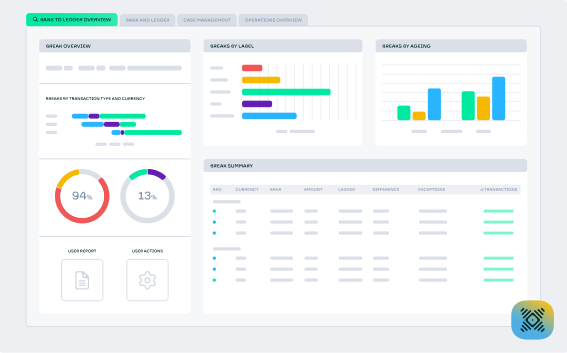
Provides visibility into reconciliation statuses, schedules, workflows, and exceptions across portfolios, entities, regions, and asset classes.
Connect internal, external and supporting data in multiple formats, without manual preparation.
ABOR & IBOR data, portfolio accounting systems, order and execution management platforms, internal position records, trade lifecycle data, settlement records, and securities lending activity where applicable.
Custodian position and transaction statements, prime broker records, broker and clearing house data, fund administrator records, counterparty confirmations, and market data providers.
Security master and instrument reference data, pricing feeds, FX rates, corporate actions data, account and safekeeping reference information, and reconciliation control datasets used to validate completeness and accuracy.
AutoRek can ingest data from virtually any source, including CSV, Excel, XML, JSON, SWIFT, ISO 20022, BAI/BAI2, APIs, databases, cloud platforms and proprietary file formats.

Daily control over positions, transactions, cash, valuations and reference data across public, OTC and alternative portfolios.

Administrators need repeatable position controls across funds, clients and custody networks.

Prime broker, administrator and internal records must remain aligned across complex strategies.

High-volume, multi-instrument post-trade control across counterparties, entities and jurisdictions.

Oversight across managers, custodians, pooled vehicles and long-term portfolios.

Structured control for irregular source data, cashflows, notices and valuation cycles.

Accurate holdings and transaction records across client portfolios, custodians and investment platforms.
Position reconciliation verifies that internal securities holdings agree with custodian, broker and administrator records.
Exception management governs the investigation, ownership and resolution of breaks identified during securities reconciliation.
Cash reconciliation validates the cash movements arising from securities trades, settlements and lifecycle events.
Go deeper on the AutoRek securities reconciliation solution.
Articles
Errors and inaccuracies can generate significant risks when firms hold securities worth billions of dollars. So, reliance on manual reconciliations is a risk that firms…

Articles
Managing digital assets introduces operational challenges that do not always have a direct equivalent in traditional finance. For digital asset custodians, centralized exchanges (CEXs), payment…

Articles
For years, the CASS regime stayed fairly stable. That is changing quickly. The FCA’s rulebook is catching up with new business models and new technology.…
Securities reconciliation compares internal books and records with external custodian, broker, clearing or administrator records to confirm that positions, transactions, cash, valuations and related reference data agree. Differences are identified, investigated and resolved through a controlled process.
AutoRek supports position, transaction, cash, valuation, NAV, ABOR/IBOR and pre- or post-trade reconciliations across equities, fixed income, ETFs, derivatives and other complex instruments.
AutoRek ingests source data, validates and standardizes it, applies configurable matching rules and tolerances, routes exceptions through workflow, and provides dashboards, reporting and an audit trail for review and sign-off.
Each asset class can use its own fields, matching logic, tolerances and valuation rules while operating within a consistent framework for data preparation, investigation, reporting and governance.
Yes. AutoRek supports ABOR/IBOR, portfolio, position and NAV reconciliations, helping teams compare accounting, investment and valuation records and route differences for investigation.
AutoRek can ingest data from virtually any source, including CSV, Excel, XML, JSON, SWIFT, ISO 20022, BAI/BAI2, APIs, databases, cloud platforms and proprietary file formats.
Unmatched items can be assigned, routed, tracked and escalated through integrated workflow. Users can add commentary and evidence, monitor ownership and status, and prioritize work by materiality, age, due date or other agreed criteria.
AutoRek validates, normalizes and enriches data before matching, which helps align identifiers, dates, currencies, reference attributes and pricing inputs that might otherwise make comparable records appear different.
Shorter settlement windows leave less time to identify and correct errors. Timelier data ingestion, automated comparison and faster exception routing help teams perform controls earlier and focus on unresolved issues before settlement deadlines.
See how AutoRek can help your team reconcile complex securities data, focus investigation on genuine breaks and apply consistent governance across asset classes, portfolios and regions.