










Skip to content

Automate your position reconciliation processes across all asset classes

Reconciling complex portfolios across global counterparties presents operational frictions driven by fragmented data feeds, mismatched security identifiers, and settlement statuses. This obscures portfolio visibility and leads to wasted time chasing manual exceptions. Streamlining your positional reconciliation workflow eliminates costly blind spots and gives teams a governed record from investigation through sign-off.

Position breaks are harder to control when every source tells a different story

When data, processes and counterparties operate on different timelines and standards, identifying genuine position breaks becomes increasingly complex.

Operational Challenges

Operations teams must compare settled units and holdings across internal books, custodians, brokers, fund administrators and other counterparties. Different cut-off times, account structures and movement treatments create apparent breaks, while manual production work leaves less time to investigate genuine exposure. Accelerated settlement also shortens the window for identifying and resolving issues.

Regulatory Challenges

For firms subject to custody-asset controls, position accuracy can feed formal reconciliation, oversight and reporting obligations.

Data Challenges

Position statements can arrive through any format, including SWIFT messages, XLS, CSV, APIs and proprietary formats. Differences in identifiers, safekeeping accounts, pricing, FX, settlement status, borrowed and lent quantities, and statement completeness can prevent like-for-like comparison.

Governance Challenges

Spreadsheet-led processes fragment ownership and evidence. Teams need clear assignment, escalation, commentary, approvals and repeatable end-of-day sign-off, with the ability to trace outputs back to source data and prior actions.

A controlled workflow from raw position data to signed-off exceptions

  1. Load internal books, portfolio records, custodian statements, broker data and relevant SWIFT messages through the delivery methods supported by the implementation.

  2. Check the completeness and quality of incoming files and statements, then normalize identifiers, accounts, dates, units and other fields required for comparison.

  3. Compare internal and external positions with configurable logic, including identifiers such as ISIN and safekeeping account where appropriate. Support one-to-one and aggregated comparisons, tolerances and enriched valuations.

  4. Label and route unmatched or imbalanced positions to the appropriate team. Give users the source context, commentary, attachments and workflow needed to determine cause and resolution.

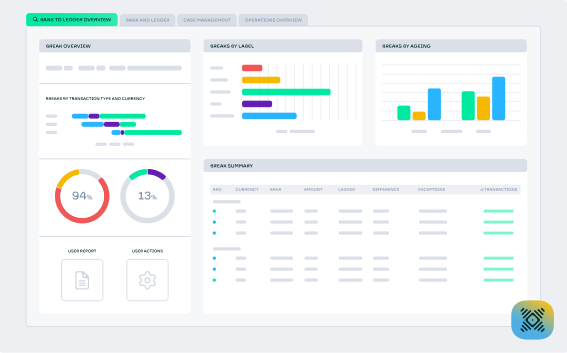
  5. Surface position imbalances, missing statements, aging and reconciliation status through dashboards and formal outputs, with drill-through to underlying exceptions.

  6. Apply role-based workflow, separation of duties, approval hierarchies and end-of-process attestation so completion and outstanding risk can be evidenced.

What this replaces

  • Spreadsheets

    Manual position comparisons, offline investigation and limited control over exceptions.

  • Legacy reconciliation tools

    Rigid systems that can struggle with new custodians, asset classes and reporting requirements.

  • Email-based exception management

    Position breaks tracked through inboxes and shared files with limited visibility and auditability.

Everything needed to automate, control and evidence position reconciliation from data ingestion through to investigation and sign-off

Strengthen position control with embedded intelligence

Established position controls provide the automation; embedded intelligence helps teams understand and act on the breaks that matter.

  • Smarter matching

    Suggests likely matches across internal and external positions using configured identifiers, safekeeping accounts, quantities, and tolerances.

  • Anomaly and pattern identification

    Highlights unusual behavior across holdings, settled and unsettled status, borrowed or lent quantities, pricing, FX, and statement history.

  • Intelligent exception support

    Uses available source, aging, position, and valuation context to support the prioritization and explanation of unmatched or imbalanced positions.

  • Manager oversight

    Provides status visibility across reconciliation schedules, expected inputs, workflows, outstanding exceptions, and completion activity.

  • Data analysis and standardization

    Analyzes feeds from books and records, custodians, brokers, administrators, reference data, and supported message or file formats to assist solution development.

Connect every source behind your position reconciliations

Ingest and reconcile records from internal systems, external counterparties and critical supporting data sources.

  • Internal Sources

    ABOR and IBOR records, portfolio and order management systems, internal books and records, trade and settlement records and securities-lending records where relevant.

  • External Sources

    Custodian position statements, prime broker and broker records, fund administrator records, counterparty records and market or reference-data providers.

  • Supporting Data Sources

    Security reference data and identifiers, prices and FX rates, account and safekeeping reference data and expected-file schedules and control data.

  • Supported Formats

    AutoRek can ingest data from virtually any source, including CSV, Excel, XML, JSON, SWIFT, ISO 20022, BAI/BAI2, APIs, databases, cloud platforms and proprietary file formats.

Position reconciliation challenges vary by organization, but the need for accurate, controlled holdings oversight remains the same

Related Use Cases

Insights for financial operations and control

Research, guides and updates on the operational and regulatory challenges facing regulated firms.

Frequently asked questions

Position reconciliation compares an organization’s internal record of holdings or units with an external record, such as a custodian, broker or administrator statement, to identify and explain differences.

Bring every position into view, and every break under control.

See how AutoRek can replace fragmented position checks with a repeatable process for data validation, matching, investigation, reporting and sign-off across internal books and external counterparties.

Book a demo