Skip to content

Take control of reconciliation exceptions

Identify unmatched items, focus investigation and manage every exception through a controlled workflow. AutoRek brings matching, commentary, evidence, ownership, escalation and reporting into one auditable platform.

Manual matching and break investigation increases risk

High transaction volumes and complex data structures leave teams managing large populations of unmatched items, often spread across spreadsheets, inboxes and local files. Ownership becomes unclear, progress is hard to track, and time is lost reconstructing context rather than resolving the issue.

Inconsistent formats, duplicate records and timing differences create avoidable exceptions and obscure root cause, while regulated firms must still evidence how each was identified, investigated, escalated and resolved. Without a live view of aging, status and ownership, manual reporting creates delays and makes oversight harder to demonstrate.


Manage exceptions through a controlled end-to-end process

  1. Bring internal and external data sources into AutoRek in their original formats, removing the need for any manual preparation before processing.

  2. Validate, standardize, filter, deduplicate, enrich or disaggregate data so the reconciliation works from consistent, usable records and potential data-quality issues can be investigated earlier.

  3. Apply configurable matching rules and tolerances to defined reconciliation scenarios, including one-to-one, one-to-many and many-to-many relationships to identify unmatched items for investigation.

  4. Identify unmatched items for investigation with relevant context, ownership, commentary and workflow. Teams focus effort on resolution of genuine exceptions rather than matching items of least concern.

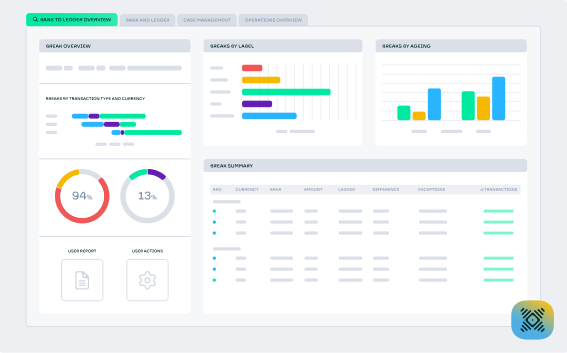
  5. Surface exception volumes, aging, status, reconciliation completion and operational MI through dashboards, drill-down views and formal end of day reporting.

  6. Assign, route and escalate exception items to apply review and approval steps, while enforcing segregation of duties and retaining a full history of user actions and decisions.

What this replaces

  • Spreadsheets & manual tracking

    Status, commentary and ownership tracked by hand. Limited visibility, inconsistent processes, no full audit trail.

  • Email chains & shared inboxes

    Investigations scattered across inboxes. Context is fragmented, ownership unclear and progress hard to track.

  • Point solutions & in-house workflows

    Separate reconciliation, case management and reporting tools disconnect processes, duplicate effort and limit end-to-end visibility.

Investigate and resolve exceptions with greater control

Focus investigation with embedded intelligence

Established automation controls the exception lifecycle, while embedded intelligence helps teams focus investigation and strengthen oversight.

  • Smarter matching

    Learns from user interactions to suggest likely relationships among unmatched internal records, bank data, transaction feeds, and third-party files for user review.

  • Anomaly and pattern identification

    Analyzes reconciliation data to surface unusual entries or recurring patterns linked to timing differences, duplicates, incomplete files, or inconsistent formats.

  • Exception prioritization

    Uses available context to help order exception populations alongside configured factors such as age, value, status, and workflow priority.

  • Intelligent guidance

    Provides context-aware assistance during investigation, including guidance on platform processes and potential next steps within controlled workflows.

  • Manager oversight

    Provides visibility into reconciliation status, schedules, workflows, and exceptions, complementing dashboards and formal reporting.

Bring every data source into one controlled process

Connect internal, external and supporting data in multiple formats, without manual preparation.

  • Internal Sources

    General ledger and sub-ledger records, front-office, transaction processing and operational systems, client, policy, trade, position, payment and account records, depending on the reconciliation, internal control accounts, cashbooks, data warehouses and reference data.

  • External Sources

    Currency and FX tables, lookup data, settlement cycles, account mappings and business-defined labels, supporting documents and evidence attached during investigation.

  • Supporting Data Sources

    Bank and custodian statements, payment scheme, processor, acquirer, issuer and settlement files, broker, insurer, fund manager, counterparty and other third-party records.

  • Supported Formats

    AutoRek can ingest data from virtually any source, including CSV, Excel, XML, JSON, SWIFT, ISO 20022, BAI/BAI2, APIs, databases, cloud platforms and proprietary file formats.

Exception management across every sector

Related Use Cases

Insights for financial operations and control

Research, guides and updates on the operational and regulatory challenges facing regulated firms.

Frequently asked questions

AutoRek applies configurable match rules across a range of match types to identify records which do not meet the criteria set within the rules. Records that do not meet the defined criteria are surfaced as exceptions for investigation.

Bring every exception into a controlled process

See how AutoRek can help your teams identify breaks earlier, focus investigation, manage ownership and escalation, and retain the evidence needed for confident oversight.

Book a demo